Slums represent the most visible face of urban inequality, dense settlements where poverty, overcrowding, and poor infrastructure converge to create serious environmental health challenges. In these communities, the absence of planned sanitation systems, clean water supply, and waste disposal mechanisms exposes millions to preventable diseases and unsafe living conditions.
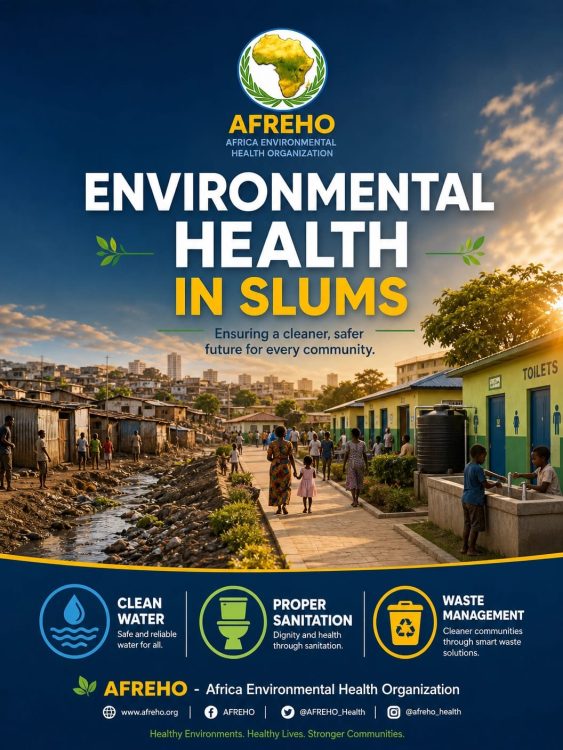
The environmental health crisis in slums begins with poor waste management. Refuse piles up in open spaces, drains are clogged with plastics, and stagnant water becomes breeding grounds for mosquitoes and flies. These conditions fuel outbreaks of malaria, cholera, and typhoid, turning everyday survival into a public health emergency. Without organized collection and disposal, waste becomes both a symptom and a source of poverty.
Water and sanitation remain critical concerns. Many slum dwellers rely on contaminated wells or shared taps, while open defecation and indiscriminate waste dumping contaminate water sources. The lack of toilets and drainage systems forces families to live amid filth, eroding dignity and increasing vulnerability to disease. Environmental health interventions must therefore prioritize clean water access, safe toilets, and community led waste control.
Air pollution and overcrowding compound the problem. Smoke from cooking stoves, burning refuse, and vehicle emissions fills the air, while cramped housing limits ventilation and increases respiratory infections. Children and the elderly suffer most, trapped in environments that undermine their health and development.
Improving environmental health in slums demands collective responsibility from government agencies, health professionals, and residents themselves. Urban renewal must include sanitation infrastructure, waste recycling, and hygiene education.
Empowering communities to take ownership of their environment transforms slums from neglected spaces into resilient, healthy settlements.
It’s high time every citizen, leaders, and health workers commit to restoring dignity in slum communities. Clean water, safe waste disposal, and hygienic living are not privileges, they are human rights. Together, we can make every settlement a place fit for healthy living.