
Climate education in schools is becoming one of the most essential tools for preparing young people to understand and respond to the growing pressures of climate stress and environmental shocks. As heatwaves intensify, rainfall patterns shift, and communities face new ecological risks, schools must evolve into centres of climate awareness, resilience building, and environmental stewardship.
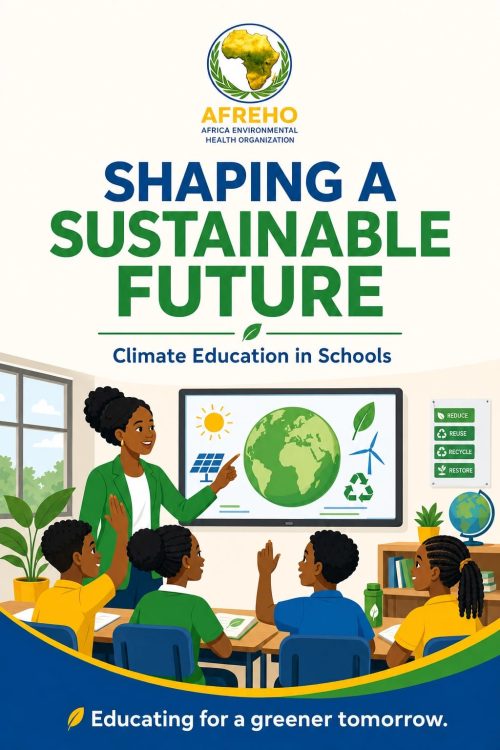
In recent years, the Africa Environmental Health Organization (AFREHO) has taken meaningful steps to support this transformation. One notable effort was the provision of plant seedlings to a partner school, an intervention small in number, yet powerful in impact. These seedlings, carefully selected for shade, resilience, and environmental value, were planted by pupils and teachers as part of a hands-on learning experience.
Through this activity, learners gained practical exposure to tree care, ecosystem restoration, and the role of vegetation in reducing heat, improving air quality, and strengthening school environments against climate stress.Although the number of seedlings was modest, the educational value was significant. It demonstrated that climate action does not begin with large budgets or massive projects, it begins with awareness, participation, and consistent effort.
The experience also revealed a deeper truth: schools need more structured climate education, more environmental resources, and stronger partnerships to build long‑term resilience.
Today, as climate shocks become more frequent, AFREHO emphasizes the need for expanded awareness and collective responsibility. Government agencies, private organisations, NGOs, school administrators, parents, and community leaders must work together to scale up climate education programmes, support green school initiatives, and equip learners with the knowledge to adapt and thrive.
Every seedling planted is a lesson. Every lesson is a step toward resilience. And every stakeholder has a role in shaping a safer, greener future for our children.