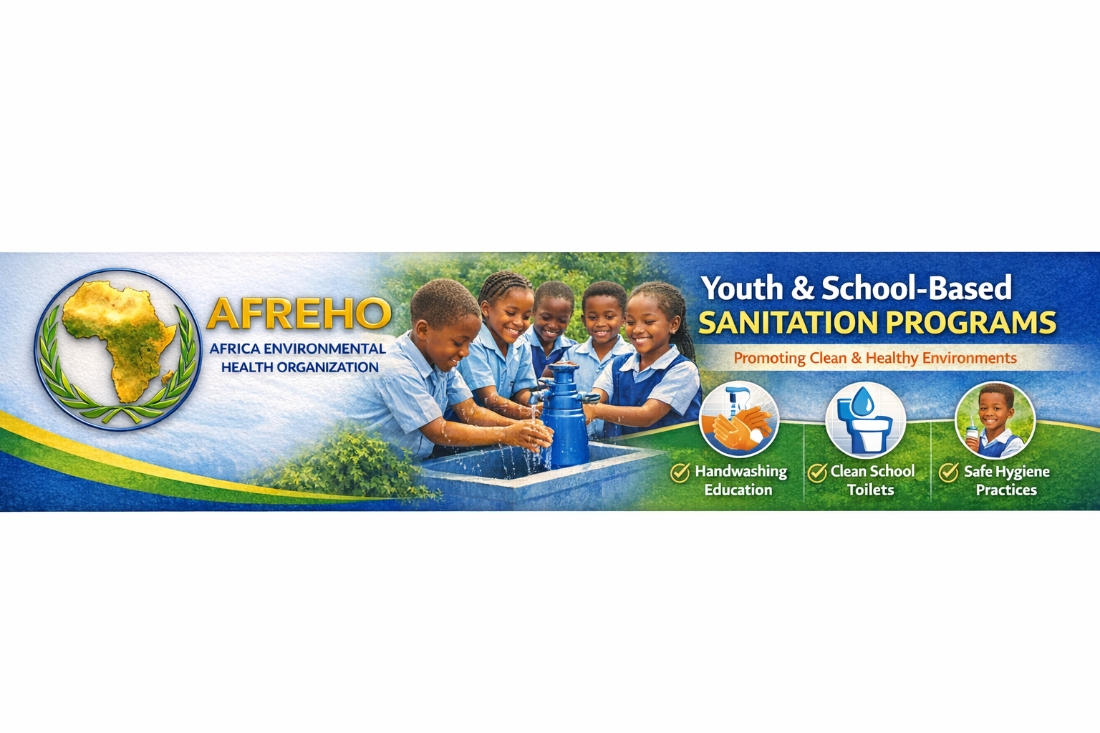
Youth and school‑based sanitation programmes remain essential pillars for building resilient communities, yet persistent gaps continue to limit their full impact. Schools shape the hygiene behaviours of millions of young people, but the lessons from COVID‑19 and other emerging diseases reveal that sanitation systems in many learning environments are still fragile, inconsistent, and under‑supported. Addressing these gaps requires renewed commitment from all stakeholders.
Teachers remain central to hygiene education, but many lack continuous training, updated materials, and institutional support. Without structured capacity building, their ability to integrate sanitation into daily routines becomes uneven. Strengthening teacher training and providing practical tools will ensure hygiene education is not treated as an occasional activity but a sustained behavioural programme.
Parents also play a critical role, yet gaps in home based hygiene practices often weaken what children learn in school. Inconsistent waste disposal, poor water storage, and limited supervision undermine the continuity needed for strong sanitation habits. Parents must be more actively engaged through community campaigns, school‑parent partnerships, and shared accountability frameworks.
Government institutions face the most visible gaps. Insufficient funding, inadequate sanitation infrastructure, weak monitoring systems, and slow response to emerging health threats. COVID‑19 exposed these vulnerabilities, demonstrating the need for reliable water supply, functional toilets, handwashing stations, and emergency preparedness plans in every school. Stronger policy enforcement and targeted investment are essential.
Environmental Health Coordinators provide technical leadership, yet their reach is often limited by understaffing, inadequate logistics, and fragmented collaboration with schools. Expanding their capacity will ensure regular inspections, timely guidance, and effective disease prevention strategies.
Closing these gaps demands a coordinated, multi‑sectoral approach where every stakeholder strengthens their contribution. When teachers, parents, government, and environmental health professionals work with shared purpose, youth sanitation programmes become powerful engines for healthier schools and more resilient communities.