Effective waste management, sanitation, and hygiene practices depend not only on infrastructure but on human behaviour. The COM‑B Model—Capability, Opportunity, and Motivation leading to Behaviour provides a powerful framework for understanding and improving these practices at community and institutional levels.
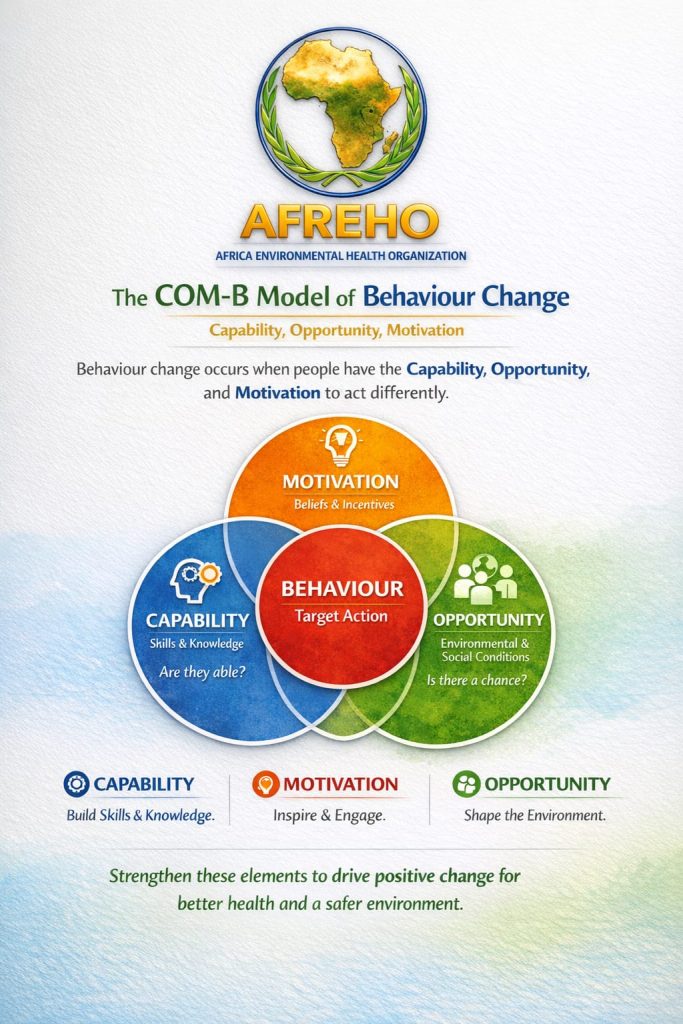
Capability refers to people’s knowledge and skills to manage waste safely, maintain sanitation facilities, and practice hygiene. Training environmental health officers, educating households on waste segregation, and teaching proper handwashing techniques build the capability needed for consistent, safe behaviour. Without this foundation, even well designed systems fail to achieve lasting results.
Opportunity involves the environmental and social conditions that enable good practices. Communities must have access to waste bins, clean water, and functional toilets. Supportive policies, reliable waste collection services, and community engagement create an enabling environment where healthy behaviours become possible and convenient. Opportunity transforms intention into action by removing physical and social barriers.
Motivation drives individuals and groups to sustain these behaviours. When people understand the health benefits of cleanliness, feel pride in a clean environment, and see recognition for their efforts, motivation strengthens. Campaigns that link hygiene to dignity, safety, and community wellbeing inspire lasting commitment.
At the intersection of these three elements lies Behaviour, the visible outcome of capability, opportunity, and motivation working together. By designing interventions that enhance all three, environmental health programmes can achieve sustainable improvements in waste management, sanitation, and hygiene. The COM‑B Model thus transforms technical solutions into behavioural systems, ensuring that communities not only have the means but also the will and understanding to maintain a clean, healthy environment.