
Worship centres are sacred spaces meant for spiritual renewal, reflection, and community unity. Yet, many of these environments face growing environmental health challenges that undermine their sanctity and safety. The influx of worshippers, vendors, and visitors often transforms these centres into bustling marketplaces, where buying and selling activities spill into surrounding premises, creating congestion and waste accumulation.
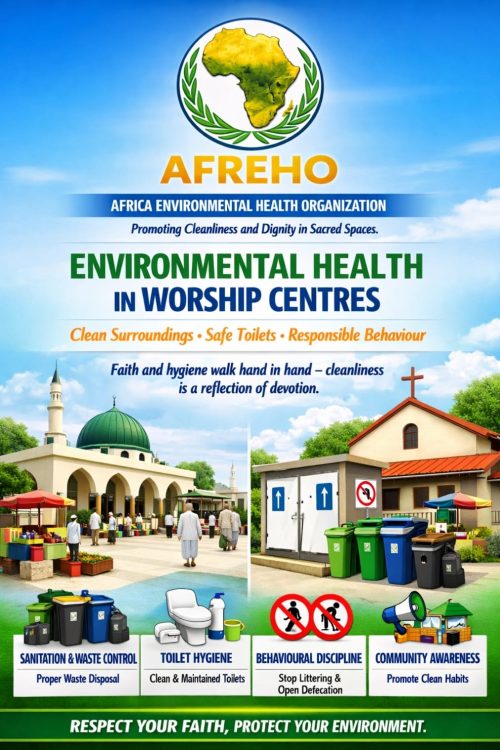
One major concern is indiscriminate urination and defecation around worship grounds. Inadequate toilet facilities or poor maintenance often push individuals to relieve themselves in open spaces, contaminating soil and water sources. This behaviour not only defaces the environment but also exposes communities to diseases such as cholera, typhoid, and diarrhoea. Proper sanitation infrastructure and behavioural education are essential to restore dignity and hygiene in these sacred spaces.
Littering and poor waste management further compound the problem. Food wrappers, plastic bottles, and disposable items from vendors and worshippers accumulate rapidly, clogging drains and attracting flies and rodents. Without organized waste collection and disposal systems, worship centres become breeding grounds for pests and pathogens, threatening both environmental and public health.
Inside the facilities, poor hygiene in toilets remains a persistent issue. Many restrooms lack running water, soap, and cleaning schedules, leaving them unhygienic and unsafe for use. Regular cleaning, proper ventilation, and maintenance routines are vital to ensure that these facilities meet acceptable health standards.
Environmental health officers and faith leaders must collaborate to promote cleanliness, waste segregation, and hygiene education. By integrating environmental health principles into worship management, these centres can become models of cleanliness and community responsibility.
Maintaining environmental health in worship centres is a shared spiritual and civic duty. Clean surroundings reflect respect for both faith and humanity, ensuring that worship remains a source of peace, not pollution.