
Environmental health education is an essential foundation for protecting population well‑being and advancing sustainable development in an era defined by environmental disruption and rapid socio‑economic change. As communities confront the realities of climate variability, urban congestion, industrial pollution, and emerging public health threats, the imperative for a knowledgeable and environmentally conscious society becomes increasingly clear. Environmental health education equips individuals and institutions with the scientific understanding, practical competencies, and ethical orientation required to safeguard both human health and ecological integrity.
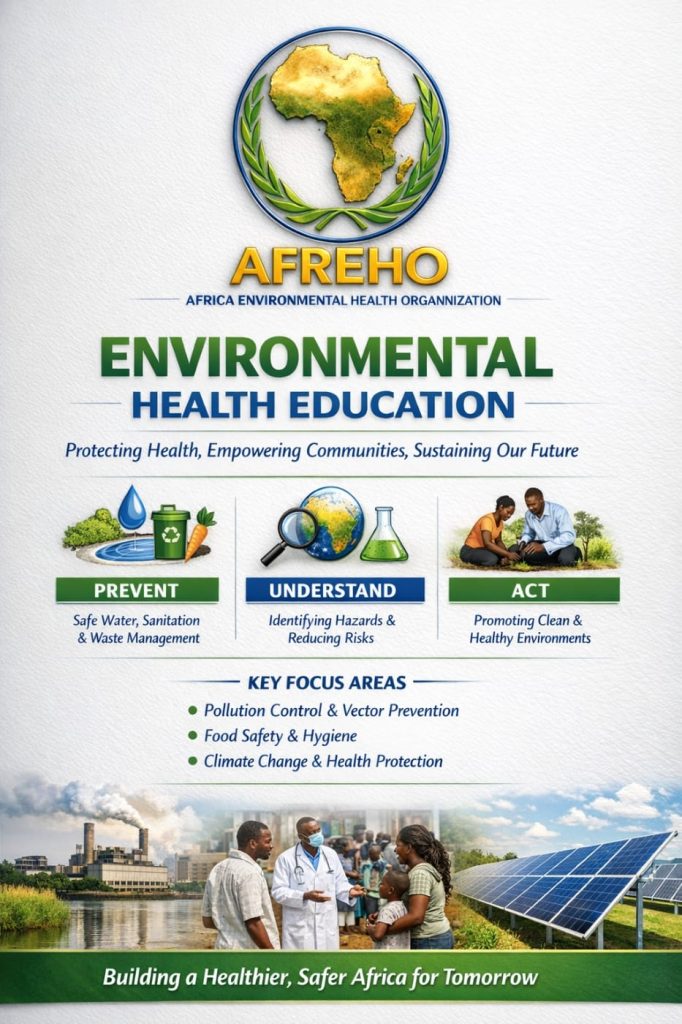
This field emphasises the prevention of disease through informed action. It promotes safe water and sanitation practices, effective waste management, food hygiene, vector control, pollution reduction, and responsible resource use. By enabling learners to identify hazards, evaluate risks, and implement evidence based interventions, environmental health education strengthens the capacity of communities to prevent illness before it occurs. It also cultivates a sense of shared responsibility, encouraging active participation in environmental stewardship, policy dialogue, and community resilience initiatives.
Within academic, professional, and community settings, environmental health education integrates environmental science, public health principles, behavioural insights, and systems thinking. It prepares environmental health officers, public health practitioners, and policymakers to design, implement, and evaluate programmes that address contemporary challenges such as chemical exposures, antimicrobial resistance, climate‑related emergencies, and the health impacts of urbanisation. Its interdisciplinary nature ensures that technical solutions are complemented by community engagement and culturally appropriate strategies.
Environmental health education is a strategic investment in human capital, environmental sustainability, and global health security. By empowering individuals with knowledge and fostering a culture of prevention, it strengthens societal resilience and supports the creation of healthier, safer, and more equitable environments for present and future generations.