Forced displacement has become one of the defining humanitarian challenges of our time. Conflicts, natural disasters, climate induced crises, and political instability push millions from their homes each year, leaving families with no option but to seek safety in temporary settlements. These refugee camps, though intended as places of protection, often struggle under the weight of rapid population influx and limited resources.
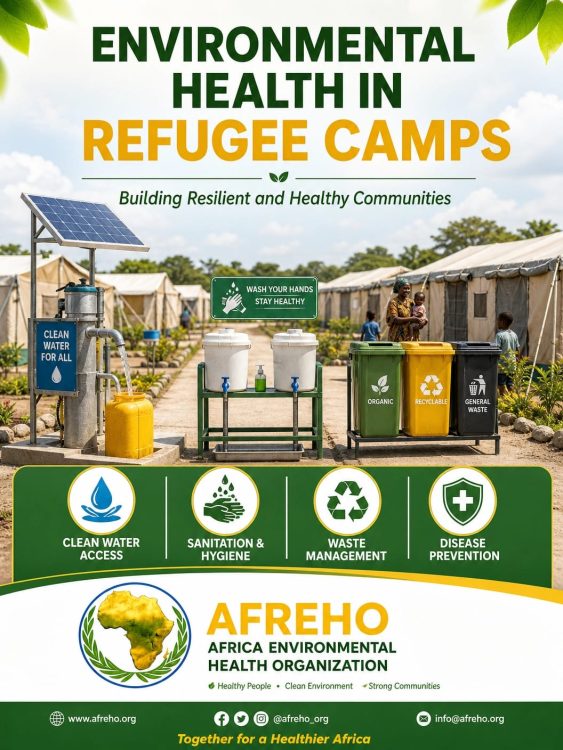
Within these camps, environmental health risks emerge almost immediately. Overcrowding, inadequate shelter, and insufficient sanitation systems create conditions where disease can spread quickly. The absence of proper waste disposal leads to open dumping, blocked drainage channels, and stagnant water, all of which become breeding grounds for vectors such as mosquitoes and flies. These challenges are intensified when camps are established in environmentally fragile areas.
Access to safe water and sanitation remains one of the most critical concerns. Many camps rely on shared water points, which are often overstretched and prone to contamination. Limited toilet facilities force residents to practice open defecation, increasing the risk of cholera, diarrhoea, and other waterborne diseases. Women and children are disproportionately affected, facing both health risks and threats to personal safety.
Air quality also deteriorates in refugee settings. The widespread use of firewood and charcoal for cooking produces smoke that fills poorly ventilated shelters, contributing to respiratory infections. Combined with dust, overcrowding, and poor waste management, these conditions create a heavy burden on already vulnerable populations.
Effective camp management requires coordinated action. Humanitarian agencies must prioritize sanitation infrastructure, vector control, safe water systems, and hygiene education. Community participation is essential, empowering refugees to take part in waste segregation, environmental monitoring, and health promotion activities.
The global community must strengthen its commitment to protecting displaced populations. Investing in environmental health is not optional, it is a moral responsibility. Every refugee deserves a clean, safe, and dignified place to rebuild hope.