
Climate change has become one of the most powerful forces shaping global development, and its consequences fall most heavily on people already living in fragile conditions. Each drought that destroys harvests, each flood that displaces families, and each heatwave that disrupts livelihoods pushes vulnerable populations deeper into hardship.
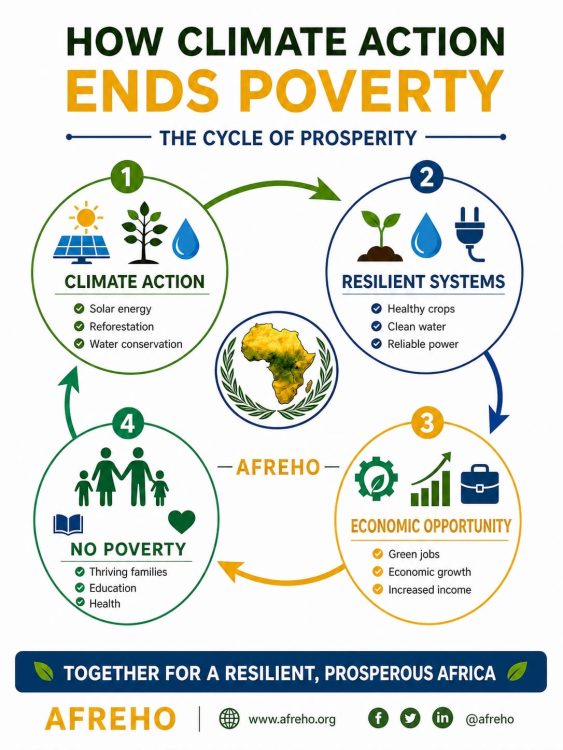
In today’s world, achieving SDG 1: No Poverty is impossible without strong, coordinated climate action. Tackling poverty now requires confronting the climate crisis with urgency and intention. Poverty persists where people are exposed to unstable environments, limited resources, and recurring shocks. Climate impacts magnify these pressures.
Building climate‑residential systems such as adaptive infrastructure, risk‑aware planning, and resilient settlements reduces the losses that repeatedly undermine household stability. When communities are shielded from climate extremes, they gain the foundation needed to pursue long term economic progress.
Nature‑based solutions offer a powerful bridge between environmental protection and poverty reduction. Restoring forests, rehabilitating degraded land, and safeguarding water ecosystems create meaningful employment while rebuilding the natural assets that sustain rural livelihoods.
Community‑led ecosystem restoration strengthens food systems, improves water security, and opens new income pathways for women, youth, and smallholder farmers.
Expanding access to clean, affordable energy is another essential driver of inclusive development. Solar mini‑grids, renewable energy enterprises, and clean cooking solutions reduce household burdens and stimulate new economic activities. The global transition to low carbon development is generating green jobs that empower communities and reduce inequality.
Climate‑smart agriculture further reinforces the link between climate action and poverty reduction. Drought resistant crops, efficient irrigation, and regenerative farming practices help farmers adapt to changing conditions while improving yields.
These innovations support climate resilient food systems that protect incomes and strengthen rural economies. When nations embed climate solutions into development planning, they replace vulnerability with resilience and move closer to a world free from poverty.