
Environmental health investment remains one of the most undervalued pillars of national development, despite its profound capacity to strengthen societal resilience and economic stability. For decades, the true power of this sector has not been fully leveraged. Annual budget allocations whether from government ministries, development partners, or private institutions often fail to manifest as tangible improvements in community wellbeing and environmental quality.
This disconnect between funding and visible societal impact reflects a deeper structural challenge, environmental health is still treated as a peripheral concern rather than a foundational driver of public welfare and sustainable growth.
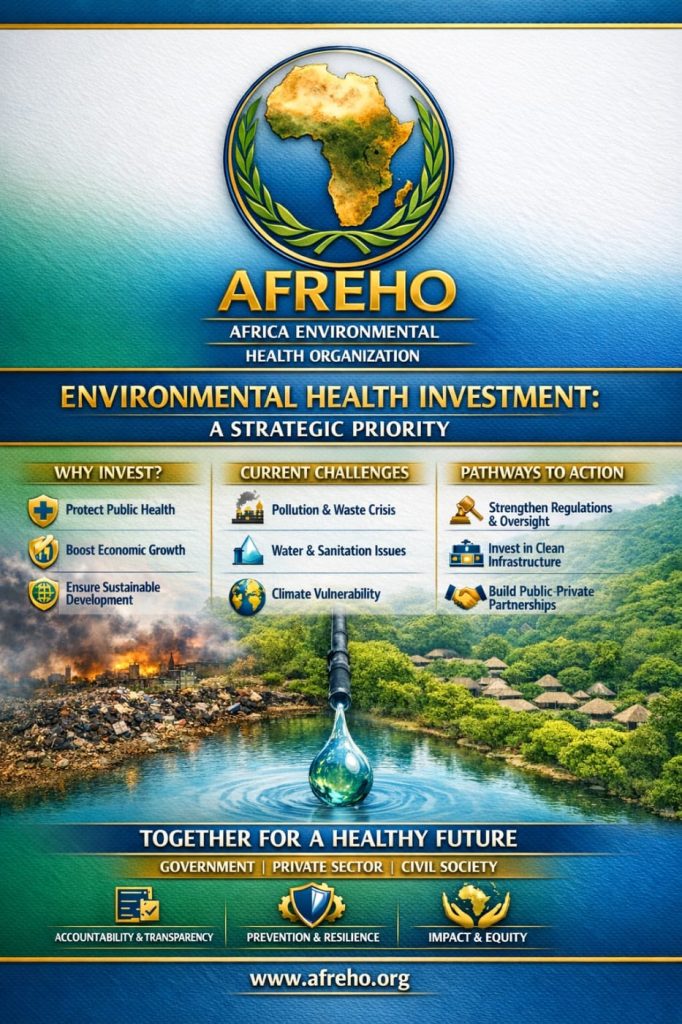
In many contexts, investments are fragmented, reactive, and poorly aligned with long‑term national priorities. Funds are frequently absorbed by administrative overheads, short‑term projects, or isolated interventions that lack continuity. Meanwhile, critical areas such as waste management, water safety, pollution control, and community level preventive systems remain underfunded and under implemented. The result is a cycle where environmental hazards persist, public health burdens increase, and the economic cost of inaction continues to rise.
To reverse this trend, environmental health must be repositioned as a strategic investment rather than an expenditure. This requires stronger accountability frameworks, transparent budget tracking, and a shift toward preventive infrastructure that reduces long‑term costs. Equally important is the integration of environmental health into national development planning, private sector sustainability strategies, and community driven initiatives.
However, no single institution can achieve this transformation alone. The complexity of environmental challenges demands collective efforts. Governments, private organizations, civil society, professionals, and citizens must work in synergy. When communities participate, institutions coordinate, and leaders prioritize environmental health, society gains a powerful pathway to resilience, equity, and shared prosperity.
Harnessing the full strength of environmental health investment is not merely an option; it is an urgent necessity for safeguarding our collective future.