
Transport hubs (airports, seaports, bus terminals, and railway stations) serve as the lifelines of modern mobility. Their constant flow of people, goods, and vehicles creates a dynamic environment where public health risks can escalate rapidly if not properly managed. Environmental health interventions in these spaces are therefore essential to safeguarding travellers, workers, and surrounding communities.
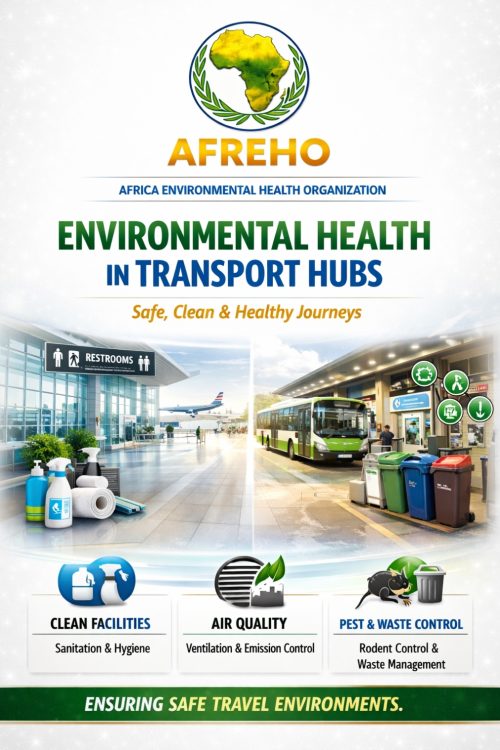
A foundational pillar of environmental health in transport hubs is sanitation and hygiene management. High traffic areas accumulate waste quickly, and without efficient systems for collection, segregation, and disposal, these hubs can become hotspots for disease transmission. Clean restrooms, accessible handwashing facilities, and routine disinfection of high‑touch surfaces form the backbone of a safe and hygienic transport environment.
Air quality presents another critical challenge. Transport hubs often experience elevated levels of exhaust fumes, dust, and indoor pollutants generated by vehicles, machinery, and human activity. Poor ventilation can intensify respiratory risks. Implementing clean air technologies, enforcing anti‑idling policies, and maintaining functional ventilation systems help reduce exposure to harmful particulates and support healthier indoor environments.
Water safety is equally vital. Drinking water stations, food courts, and sanitation facilities must be supplied with clean, treated water. Regular monitoring of microbial and chemical quality prevents waterborne diseases. Food vendors operating within transport hubs must follow strict hygiene protocols to ensure safe preparation, storage, and handling of meals served to the public.
Vector control is another essential component. Waste accumulation, stagnant water, and structural gaps can attract rodents, flies, and mosquitoes. Integrated pest management strategies, proper drainage, and routine inspections help reduce the risk of vector borne diseases and maintain a safe environment for travellers and staff.
Effective environmental health in transport hubs relies on strong governance, trained personnel, and continuous monitoring. When sanitation, air quality, water safety, and vector control are well managed, transport hubs become safer, healthier, and more resilient spaces that support sustainable mobility and public wellbeing.