The Health Belief Model (HBM) offers a powerful framework for understanding how individuals and communities respond to environmental health risks, especially during disasters, disease outbreaks, and public health emergencies. In such periods, behaviour is shaped not only by information but by how people perceive danger, consequences, and their own ability to act.
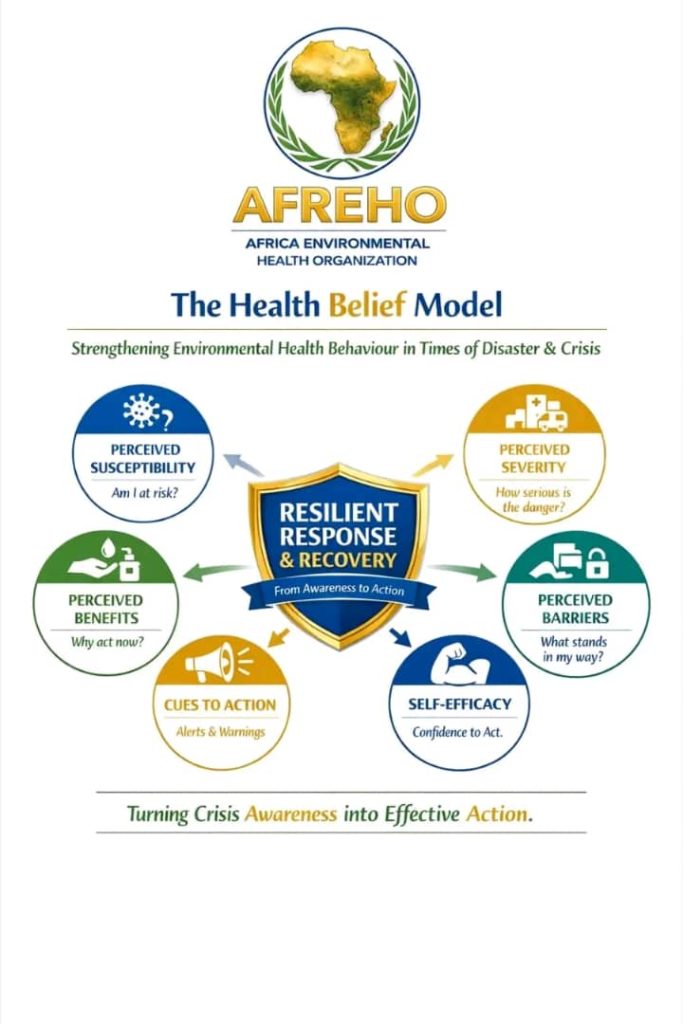
Perceived Susceptibility becomes heightened during crises. Floods, waste overflows, contaminated water, and disrupted sanitation systems increase vulnerability to cholera, typhoid, malaria, and other epidemic prone diseases. When people recognize that these threats directly affect them, they are more likely to adopt protective behaviours.
Perceived Severity reinforces the seriousness of inaction. Disasters amplify the consequences of poor hygiene and waste mismanagement leading to rapid disease transmission, environmental contamination, and community displacement. Understanding these severe outcomes motivates urgent compliance with public health guidance.
Perceived Benefits highlight the value of preventive actions such as proper waste disposal, hand hygiene, safe water storage, and use of sanitation facilities. In emergencies, these behaviours reduce disease spread, protect vulnerable groups, and support community resilience.
Perceived Barriers often increase during crises, limited resources, damaged infrastructure, fear, misinformation, or restricted mobility. Effective emergency response must identify and remove these obstacles through rapid support, clear communication, and accessible services.
Cues to Action become critical triggers. Early warning messages, outbreak alerts, community mobilization, and visible health campaigns prompt immediate protective behaviour. These cues guide communities through uncertainty.
Finally, Self‑Efficacy empowers individuals to act confidently even under pressure. When people believe they can protect themselves and their families, they respond more effectively to crises.
By integrating these six components, the Health Belief Model strengthens environmental health preparedness and response, transforming awareness into decisive action and building resilient communities capable of withstanding disasters and outbreaks.