
Fitness for habitation is a core determinant of public health and human dignity. A truly habitable building is not defined by walls and a roof alone; it is a living environment that safeguards life, promotes wellbeing and supports productive living. Adequate ventilation, safe drinking water, functional sanitation, structural integrity, proper drainage, vector control, and freedom from dampness, mould and toxic exposures form the minimum threshold for healthy habitation. When these conditions fail, the home becomes a silent threat, a generator of disease, stress and preventable suffering.
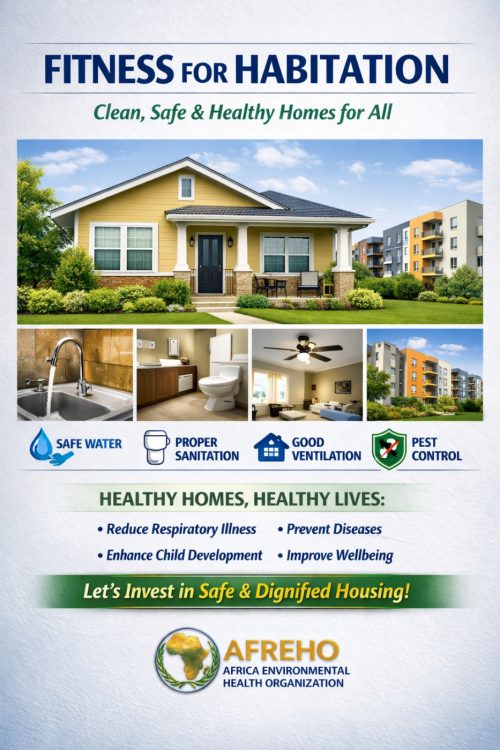
The health consequences are profound. Poor indoor air quality fuels asthma and chronic respiratory illness. Dampness and mould weaken immunity. Inadequate sanitation drives diarrhoeal diseases and environmental contamination. Structural defects expose residents to injuries, while overcrowding accelerates the spread of infectious diseases. Children, the elderly and low‑income households bear the greatest burden, reinforcing cycles of vulnerability and widening health inequalities.
Ensuring habitability demands coordinated, multisectoral action. Government agencies must strengthen enforcement of building codes, housing standards and environmental health regulations. Environmental health officers are essential in inspections, compliance monitoring and community sensitisation. Architects, engineers and urban planners must design buildings that are climate resilient, energy efficient and health protective. Landlords and developers must uphold ethical responsibility by maintaining safe living conditions. Communities, too, play a vital role in reporting hazards, maintaining cleanliness and advocating for safer neighbourhoods.
Healthy homes are the foundation of a healthy nation. Every stakeholder must commit to making fitness for habitation a non‑negotiable standard. Let us demand accountability, invest in safe housing, and prioritise environments that protect life and dignity. When we secure habitability, we strengthen public health, advance equity and build resilient communities capable of supporting national development.