Malaria continues to pose a profound public health challenge in many parts of the world, particularly in regions where environmental conditions, inadequate sanitation, and weak health systems allow transmission to persist. Commemorating Malaria Day is more than symbolic, it is a strategic reminder of the urgent need to reinforce prevention through education, environmental management, and coordinated action across all sectors of society.
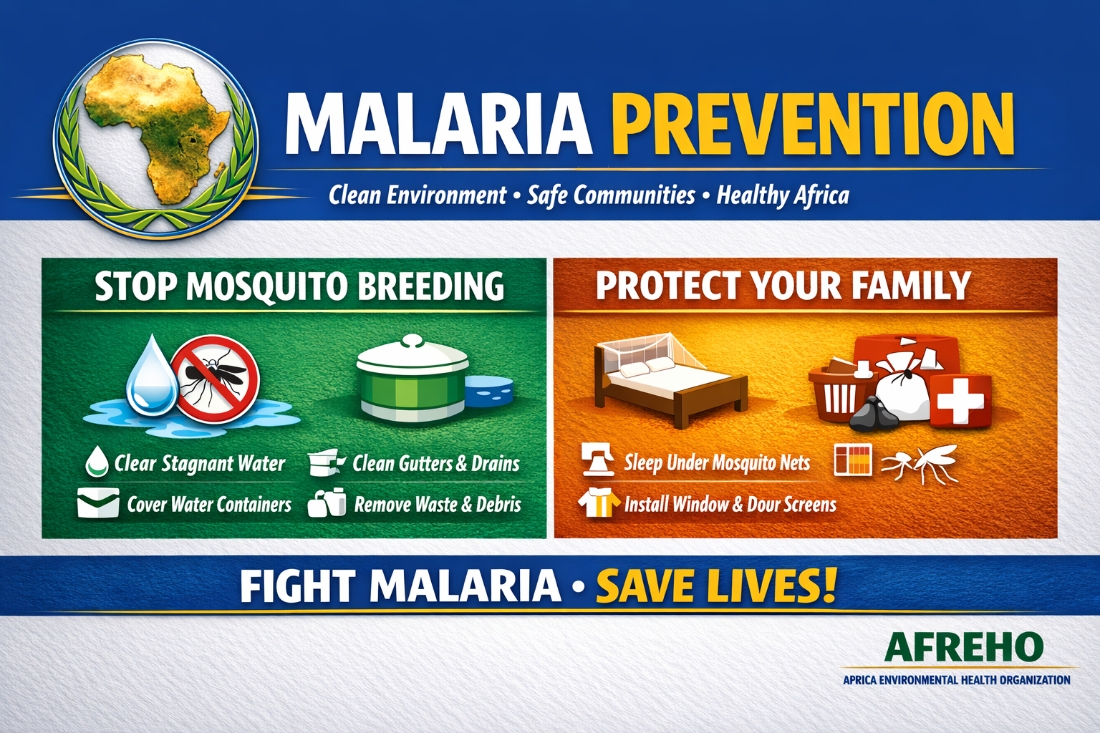
Effective malaria prevention begins with public awareness and behavioural change, ensuring that individuals and communities understand how malaria spreads and how simple, consistent actions can interrupt transmission. Education empowers households to adopt protective measures such as proper use of insecticide‑treated nets, early treatment seeking behaviour, and routine elimination of stagnant water around homes.
Equally critical are environmental sanitation and environmental manipulation strategies, which remain some of the most powerful tools for reducing mosquito breeding. Regular clearing of drains, proper waste disposal, improved drainage systems, and community led clean‑up campaigns directly reduce vector habitats. When these practices are institutionalised, they transform high risk environments into healthier, safer living spaces.
However, malaria prevention cannot rely on households alone. Government agencies, environmental health professionals, community organisations, and private sector partners must deepen collaboration to sustain long term progress. Strengthening intersectoral coordination ensures that environmental health policies are enforced, vector control programmes are adequately funded, and innovations such as improved housing designs, larval source management, and emerging malaria vaccines are integrated into national strategies.
Professionals in environmental health must take the lead in guiding evidence based interventions, monitoring environmental risks, and mobilising communities. Policymakers must prioritise prevention as a development imperative, recognising that malaria control contributes to productivity, education, and economic stability.
As we mark Malaria Day, the message is unequivocal: malaria is preventable, but prevention demands discipline, leadership, and collective responsibility. Every stakeholders, government, professionals, communities, and individuals must intensify efforts to safeguard the environment, strengthen public health systems, and commit to a future where malaria no longer threatens lives or limits national progress.